
EBOO vs EBO2 vs EBO3: What's the Difference?
If you have been researching advanced ozone-based blood oxygenation systems, you have probably seen different names being used online, including EBOO, EBO2, and EBO3.
This can get confusing, especially for clinics, medical providers, researchers, and wellness professionals trying to understand the difference between each machine category.
The simple answer is this:
EBOO is the earlier full-spectrum UV-style extracorporeal blood oxygenation and ozonation machine.
EBO2 is commonly described as the next-level version that can process more blood and uses red light.
EBO3 is the more advanced machine category with more light options, more customization, direct oxygen and ozone control, expanded blood-volume flexibility, and additional safety monitoring features.
This article is for educational and research purposes only. It is designed to help readers understand the terminology, machine differences, and general feature comparisons between EBOO, EBO2, and EBO3 systems.
If you are a clinic owner or medical professional looking for an advanced machine, you can also view our EBOO O3 machine here.
Quick Comparison: EBOO vs EBO2 vs EBO3
Here is the easiest way to understand the difference:
What Is EBOO?
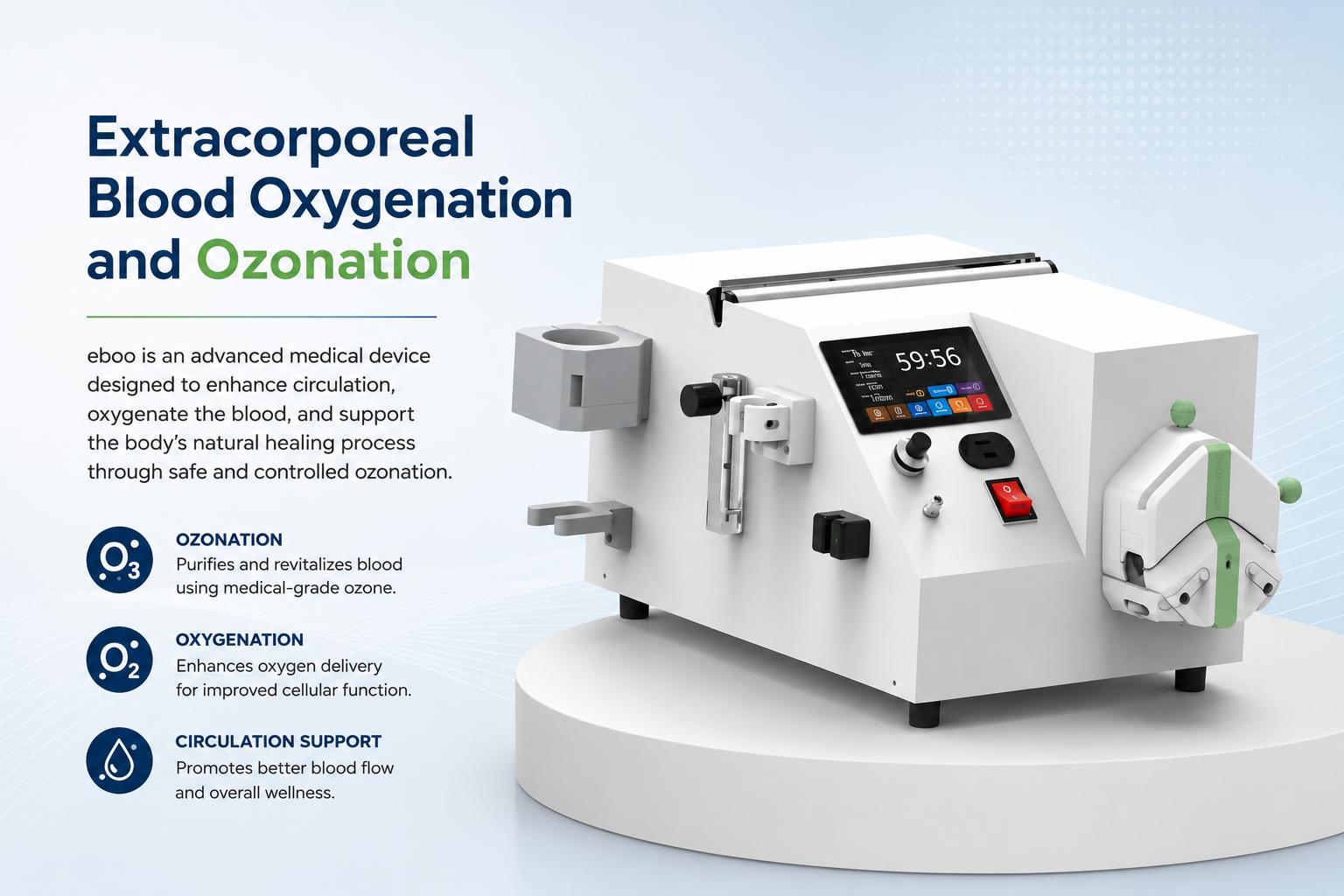
An EBOO system displaying its technical classification: Extracorporeal Blood Oxygenation and Ozonation.
EBOO stands for Extracorporeal Blood Oxygenation and Ozonation.
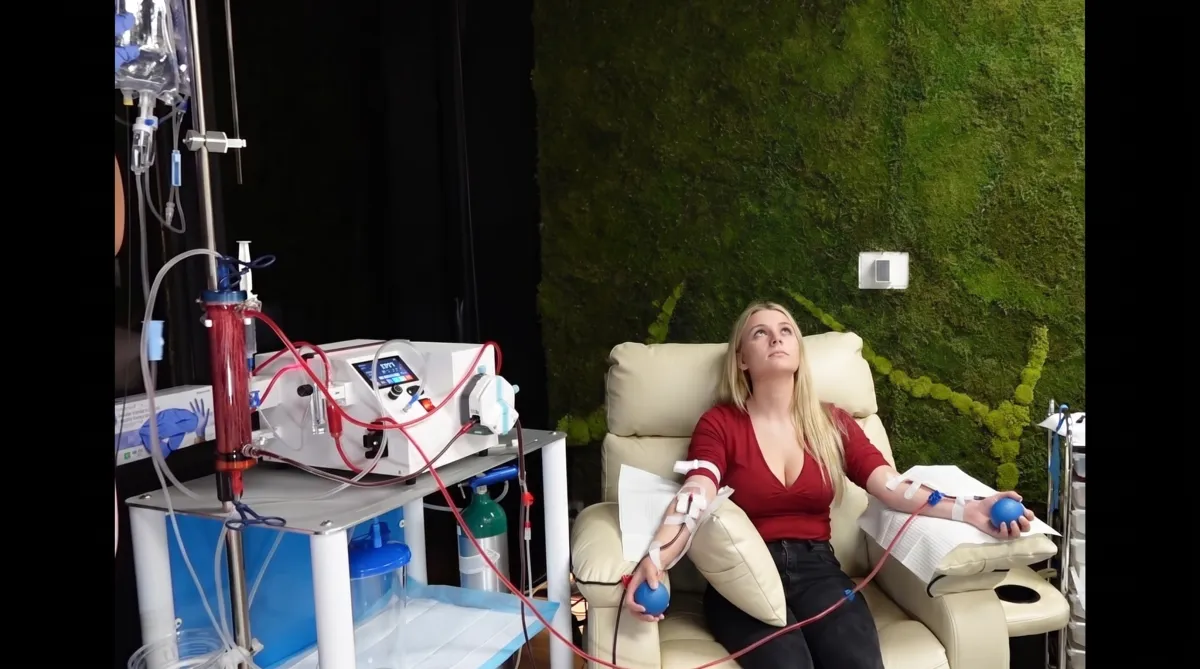
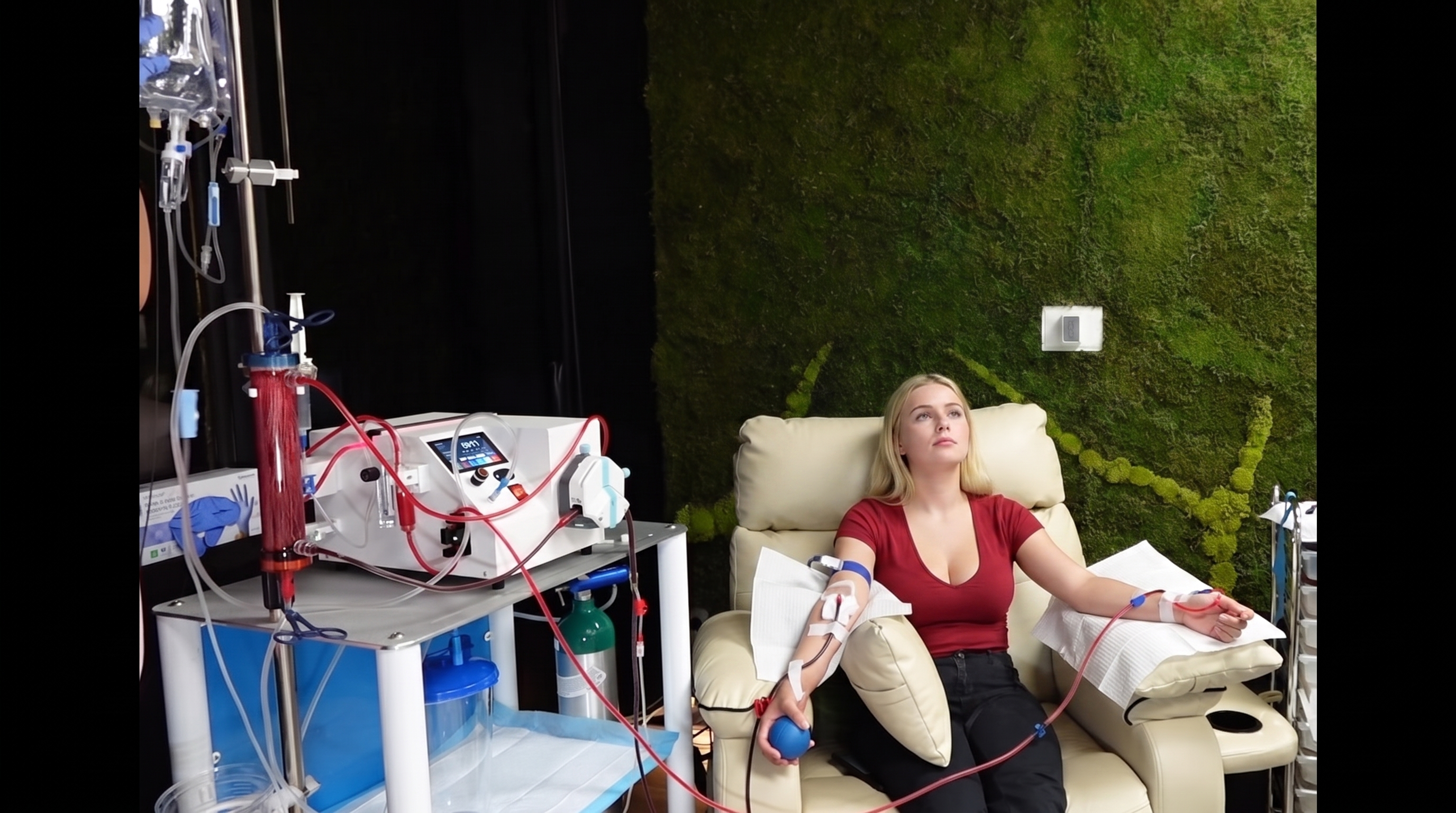
"Extracorporeal" means outside the body. In an EBOO-style system, blood is circulated through a machine, passed through filtration and light exposure components, and then returned through a controlled process.
The earlier EBOO-style machine is commonly described as a full-spectrum UV EBOO machine. It is one of the first-generation versions of this type of system.
In a basic EBOO setup, blood is pulled through a line, moved through a pump, passed through an H20 hemodialysis filter, exposed to UV and LED light, and combined with oxygen and ozone as part of the machine workflow.
A basic EBOO machine is commonly associated with running approximately 2-3 liters of blood per session, depending on the system, setup, operator training, and intended protocol.
For educational and research discussions, EBOO is usually viewed as the foundation category.
It includes:
Blood circulation through a machine
Oxygen and ozone use
H20 hemodialysis filtration
UV and LED light exposure
A controlled extracorporeal workflow
EBOO is still a useful term, but it is generally the starting point when comparing EBOO, EBO2, and EBO3.
What Is EBO2?
EBO2 is commonly discussed as a more advanced version of the basic EBOO-style process.
Compared to EBOO, EBO2 is generally associated with processing more blood volume. While basic EBOO is commonly described around 2-3 liters, EBO2 is commonly described around 3-4 liters, with some setups potentially going higher depending on the system and protocol.
Another key difference is the light source.
Where basic EBOO is often associated with UV and LED light, EBO2 is commonly described as using red light.
EBO2 may still use an H20 hemodialysis filter, similar to basic EBOO, but the main differences are typically the higher-volume workflow and the light exposure configuration.
In simple terms:
EBOO is the earlier foundational system. EBO2 is a more advanced step that generally allows more blood volume and uses red light instead of the UV/LED-style configuration commonly associated with basic EBOO.
For clinics and researchers comparing machines, EBO2 is often viewed as a middle step between basic EBOO and the newer EBO3 category.
What Is EBO3?
EBO3 is the more advanced machine category when comparing EBOO vs EBO2 vs EBO3.
The biggest difference with EBO3 is customization.
An EBO3 machine may allow the operator to choose between different modes and workflows, including EBOO-style sessions, EBO2-style sessions, or full-blood sessions depending on the machine configuration and intended use.
One of the most important upgrades is the light system.
Instead of being limited to UV/LED or red light, EBO3 is described as having five different lights and six different modes. These may include red, green, blue, yellow, UV, LED, and multicolor options depending on the specific machine configuration.
Some EBO3 systems may also allow the operator to rotate through lights every 1 minute, 5 minutes, or 10 minutes, depending on preference and intended educational or research use.
EBO3 is also associated with more advanced ozone and oxygen control.
Unlike basic EBOO-style machines where ozone and oxygen control may be more limited, EBO3 can provide direct control of ozone and direct control of oxygen.
This is one of the main reasons EBO3 is positioned as a more advanced machine category.
EBO3 may also support higher-volume workflows, including full-blood sessions of 6 liters plus, depending on setup, training, and intended use.
In simple terms:
EBO3 is designed to provide more control, more customization, more light options, more blood-volume flexibility, and more safety monitoring compared to earlier EBOO and EBO2-style machines.
Main Difference #1: Blood Volume
One of the biggest differences between EBOO, EBO2, and EBO3 is the amount of blood volume the machine workflow is designed to support.
A basic EBOO session is commonly described around 2–3 liters.
EBO2 is commonly described around 3–4 liters, with some setups potentially going higher.
EBO3 can support EBOO-style, EBO2-style, or full-blood workflows, including 6 liters plus depending on the machine, setup, and protocol.
For clinics and research settings, this matters because different workflows may require different treatment times, operator training, consumables, machine monitoring, and patient screening.
Main Difference #2: Light Options
Light exposure is another major difference.
Basic EBOO is commonly associated with UV and LED light.
EBO2 is commonly associated with red light.
EBO3 offers a more advanced light system with five different lights and six different modes. Depending on the machine, this may include red, green, blue, yellow, UV, LED, and multicolor cycling options.
This gives EBO3 more flexibility for clinics and research users who want more control over light exposure settings.
Main Difference #3: Ozone Control
Ozone control is one of the most important machine differences.
With basic EBOO-style machines, ozone is included as part of the workflow, but the level of control may be limited compared to more advanced systems.
EBO3 is described as having direct ozone control, allowing the operator to adjust ozone settings more specifically.
This is a major feature difference because ozone is one of the core parts of EBOO-style machine design.
For educational and research use, direct ozone control may allow a more customized workflow, but it also requires proper training, appropriate protocols, and careful operation.
Main Difference #4: Oxygen Control
Oxygen control is another important difference.
Basic EBOO and EBO2 systems may include oxygen as part of the process, but EBO3 is described as offering direct oxygen control.
This gives the operator more control over the oxygen side of the machine workflow.
Some EBO3 discussions also reference separating oxygen and ozone modes for specific machine settings.
This is one of the reasons EBO3 is often positioned as more customizable than basic EBOO and EBO2 systems.
Main Difference #5: Safety Features
Safety features are one of the biggest reasons clinics compare EBOO vs EBO2 vs EBO3 machines.
A newer EBO3-style machine may include additional monitoring and safety features, such as:
Bubble detection
Tachycardia detection
Real-time monitoring
Real-time stats
Automatic shutoff if certain settings exceed safety limits
More advanced operator visibility during the session
These features are important because extracorporeal blood oxygenation and ozonation systems require a controlled workflow, proper training, patient screening, and appropriate operator supervision.
For clinics evaluating an EBOO machine for clinics, safety monitoring should be one of the first things they compare.
Main Difference #6: Machine Customization
The biggest overall difference between EBOO, EBO2, and EBO3 is customization.
Basic EBOO is more straightforward.
EBO2 expands the workflow with higher blood volume and red light.
EBO3 adds more flexibility, including:
Multiple light options
Multiple light modes
Light rotation timing
Direct ozone control
Direct oxygen control
EBOO-style workflow
EBO2-style workflow
Full-blood workflow
More advanced real-time monitoring
More safety features
This is why EBO3 is usually positioned as the more advanced machine category.
Is EBO3 Better Than EBOO or EBO2?
From a feature standpoint, EBO3 is more advanced than basic EBOO and EBO2.
However, “better” depends on the intended use, training, clinic setup, and workflow.
For a clinic that only needs a simple EBOO-style setup, a basic EBOO machine may be enough.
For a clinic that wants a higher-volume workflow and red light, EBO2 may be the right fit.
For a clinic or research setting that wants more customization, more light options, direct ozone and oxygen control, expanded blood-volume flexibility, and additional safety monitoring, EBO3 is typically the more advanced option.
The best choice depends on the clinic's goals, staff training, protocols, and how the machine will be used.
What Should Clinics Look for in an EBOO, EBO2, or EBO3 Machine?
If you are a clinic owner, doctor, nurse, or researcher comparing machines, do not make your decision based only on the name.
Instead, compare the actual machine features.
Before choosing a machine, ask:
How much blood volume can the machine workflow support?
Does it support EBOO-style sessions?
Does it support EBO2-style sessions?
Does it support full-blood sessions?
What type of light system does it use?
Does it include UV, LED, red light, or multiple light modes?
Can the operator control ozone directly?
Can the operator control oxygen directly?
What filtration system does it use?
What safety features are built in?
Does it include bubble detection?
Does it include real-time monitoring?
Does it include automatic shutoff features?
Are filters, tubing, and blood lines easy to source?
Is training available?
Is marketing or launch support available for clinics?
These questions matter more than the name alone.
Why the EBOO O3 Machine Matters for Clinics
For clinics that want the flexibility of advanced ozone-based blood oxygenation equipment, the EBOO O3 machine is designed to give providers more capability than a basic EBOO-style setup.
The right machine can support a more professional workflow by offering:
EBOO and EBO2-style operation
Advanced oxygen and ozone control
Real-time treatment visibility
Touchscreen controls
Pressure monitoring
Safety alerts
Filtration support
Light chamber options
Compatible filters and blood lines
Training and launch guidance
For many clinics, the machine is only one part of the decision. The bigger question is whether the supplier can help the clinic understand setup, consumables, staff workflow, patient education, and how to launch the service properly.
If you are researching an EBOO machine for clinics, you can learn more about our EBOO O3 machine here.
Educational and Research Use Disclaimer
This article is for educational and research purposes only.
The information provided here is intended to help readers understand general terminology and machine feature differences between EBOO, EBO2, and EBO3 systems.
Nothing in this article is intended to diagnose, treat, cure, or prevent any disease. Any clinical use should be handled by qualified medical professionals, with proper training, patient screening, informed consent, and compliance with applicable laws, regulations, and professional standards.
Machine features, protocols, and use cases may vary depending on manufacturer, configuration, operator training, and intended setting.
Final Summary: EBOO vs EBO2 vs EBO3
The easiest way to understand the difference is this:
EBOO is the earlier full-spectrum UV-style extracorporeal blood oxygenation and ozonation machine category. It commonly uses an H20 hemodialysis filter, UV/LED light, ozone, oxygen, and processes approximately 2–3 liters of blood depending on setup.
EBO2 is commonly viewed as the next step up. It typically processes more blood, often around 3–4 liters, and is commonly associated with red light instead of the UV/LED-style setup.
EBO3 is the more advanced machine category. It offers five different lights, six different modes, direct ozone control, direct oxygen control, the ability to support EBOO, EBO2, or full-blood workflows, and additional safety monitoring features.
For clinics and research settings, the most important thing is not just the name. The most important thing is the actual machine capability, safety features, training, consumables, and support behind it.
If you are comparing EBOO, EBO2, and EBO3 machines, make sure you evaluate the full system before making a decision.